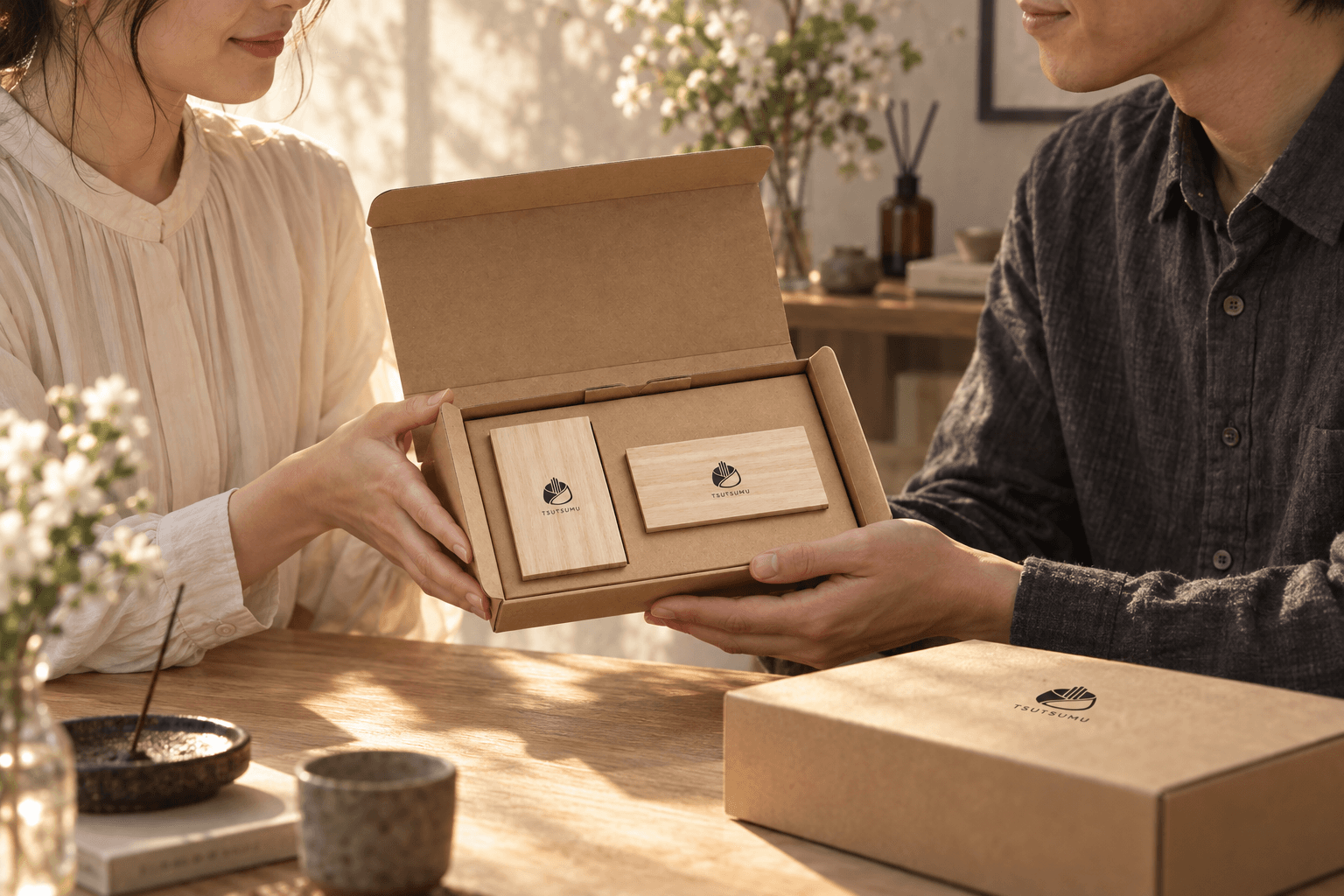
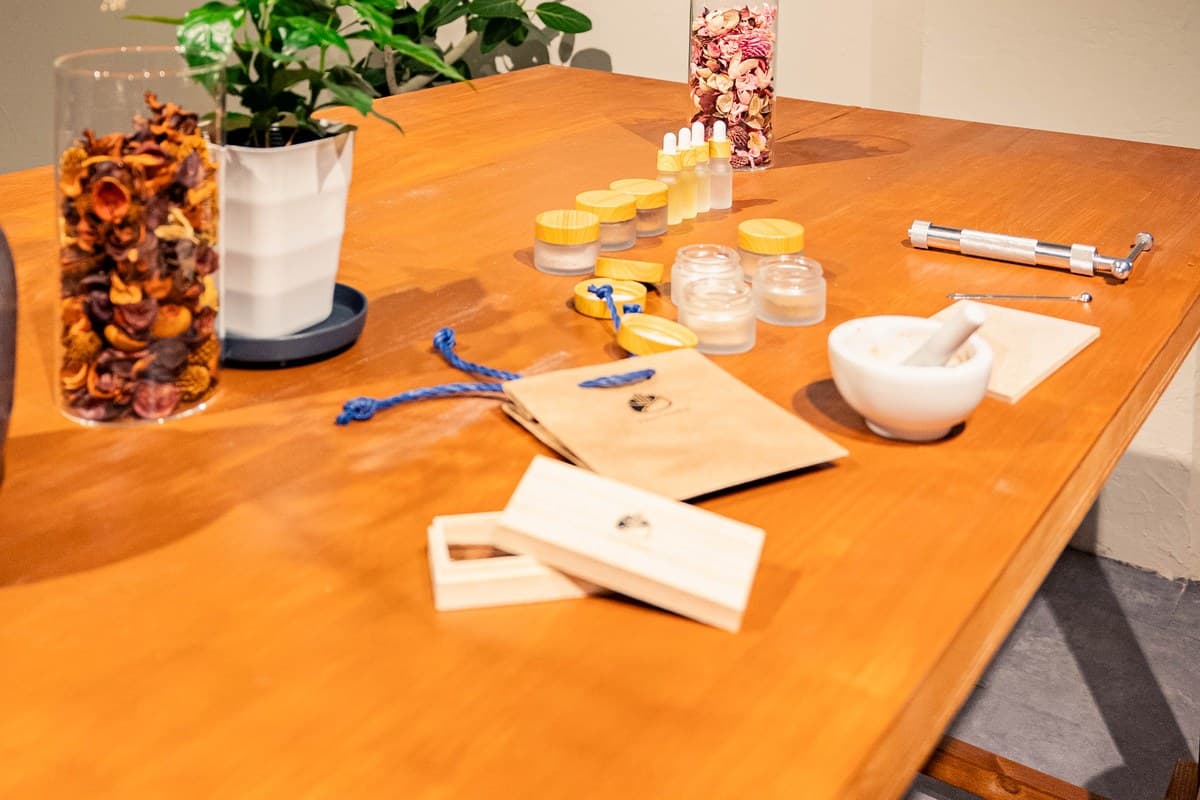
Among the five mix fragrances at TSUTSUMU, our incense-making studio in Fukuoka, there is one with a character all its own: cinnamon. In our Hakata workshop, a single pinch of it changes the expression of an entire blend. Today, the story behind that warmth.
Cinnamon is, in fact, tree bark
Those brown quills on the spice shelf are the dried inner bark of an evergreen tree in the laurel family.
The bark is peeled thin and left to dry, and as it dries it curls up on its own. That distinctive shape is not made by hand — it is simply what the bark does.
It comes from Sri Lanka, China, Vietnam and elsewhere. Even under the single name "cinnamon," the strength and sweetness differ by origin, and what suits cooking is not always what suits fragrance.
One of the oldest spices in the world
Cinnamon's history is remarkably old. In ancient Egypt it is said to have been used in preserving the dead, because it was believed to hold decay at bay.
It appears in the Old Testament as an ingredient of holy anointing oil. Back then it was as valuable as gold, and where it came from was kept secret for centuries — merchants are said to have invented elaborate tales to hide its origin.
In other words, long before it was a cooking spice, cinnamon was a fragrance of prayer and of trade.
In Japan, it has long been loved as nikki
In Japanese, cinnamon is called nikkei, or more familiarly nikki. Yatsuhashi, the folded cinnamon sweets of Kyoto, and old-fashioned nikki candies — many Japanese people know the scent from childhood.
In kampo (traditional medicine) it is known as keihi and used as a herb that warms the body. It has also long been a material in the world of incense: keihi frequently appears in traditional recipes for scented sachets.
So for Japanese people, cinnamon is both an imported spice and something that has lived inside the culture of fragrance for centuries.
What happens when you put it in incense
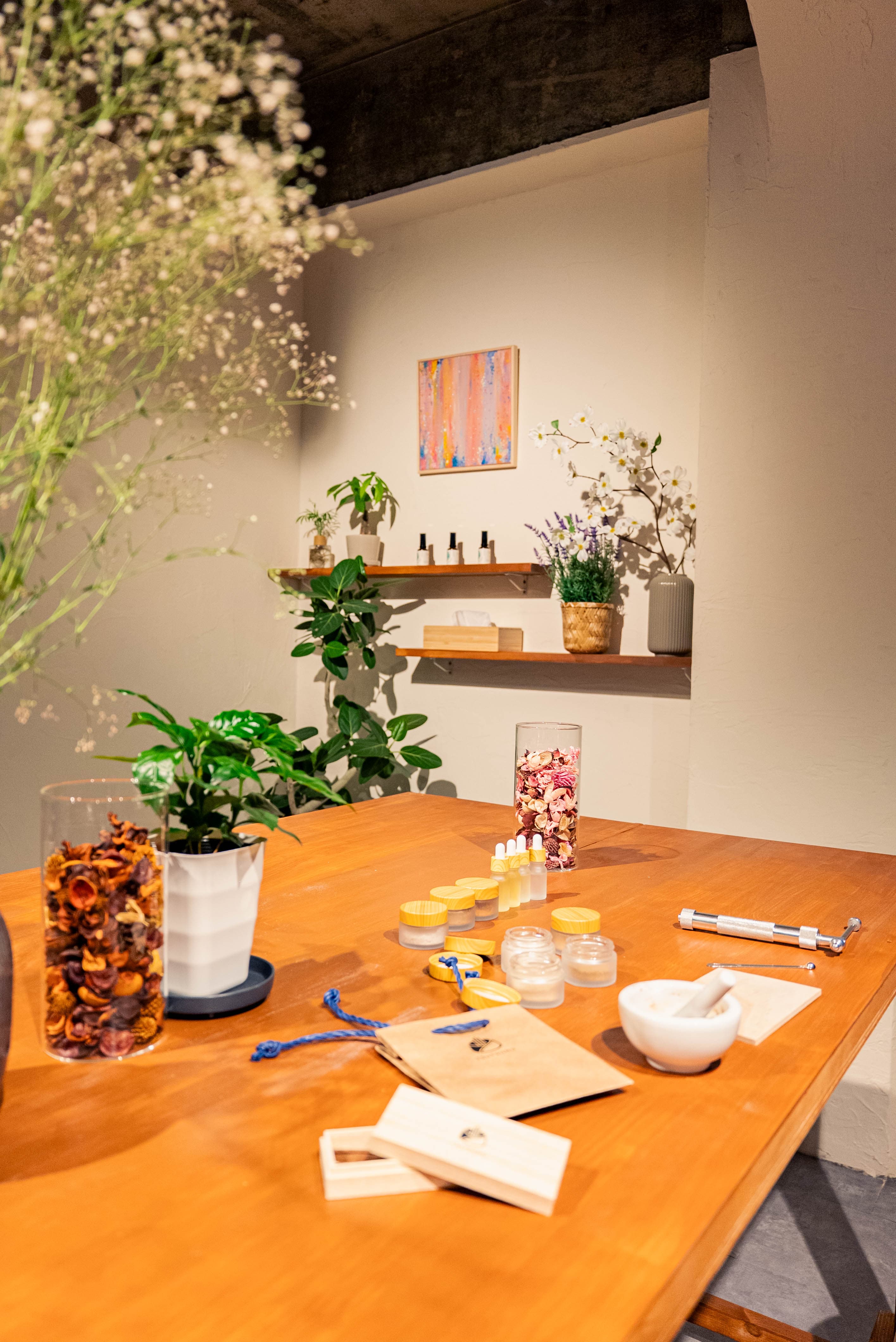
If we had to describe cinnamon's role in one word: it sharpens.
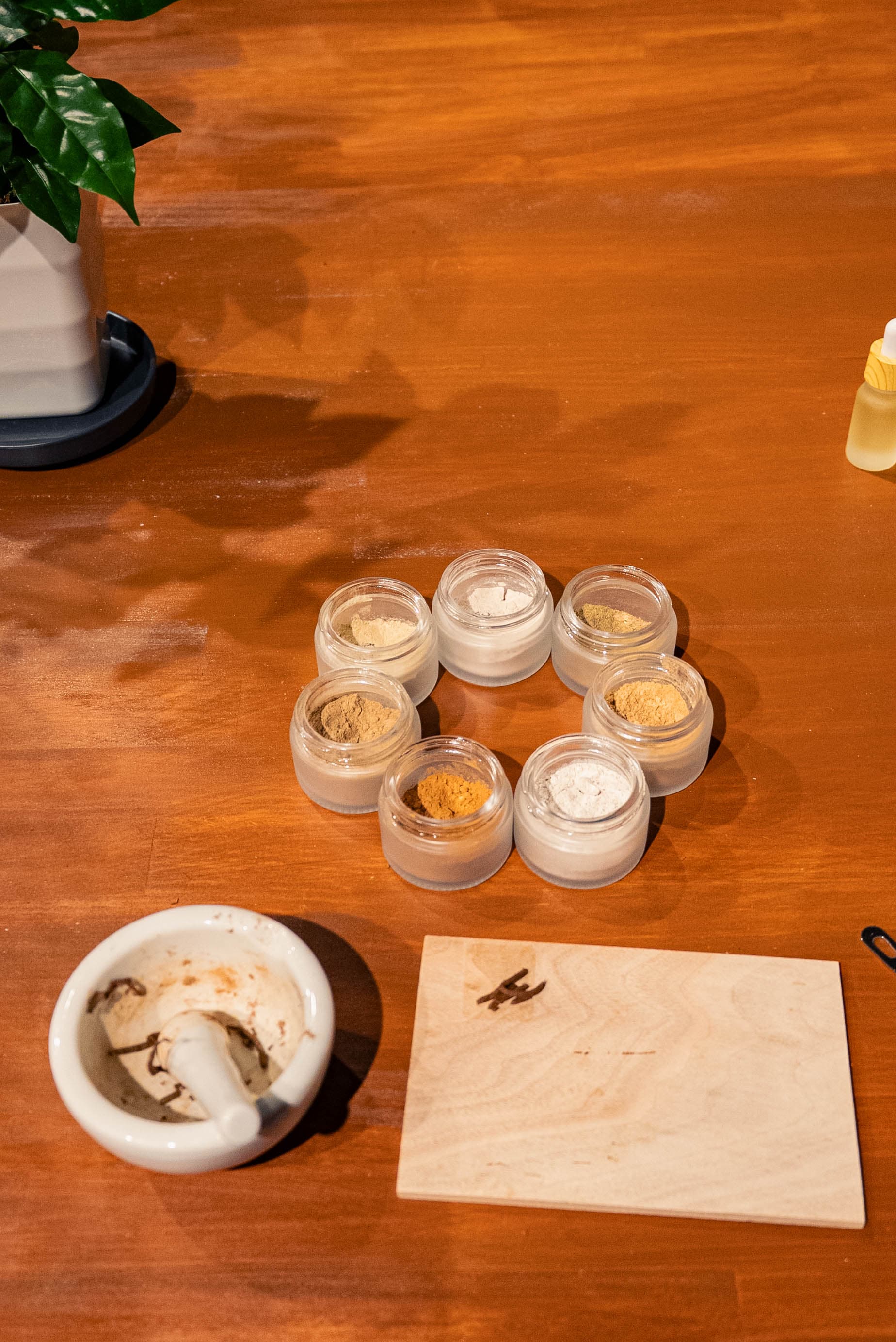
Among our five mix fragrances, cinnamon is the only spice. It points in a completely different direction from the freshness of lemongrass, the sweetness of benzoin or the brightness of osmanthus.
A blend that is only sweet begins to lose its outline after a while. Add the smallest amount of cinnamon and a spine runs through the whole thing — the edges come back into focus.
Be careful not to overdo it, though. Cinnamon speaks loudly, and too much will turn the entire blend into cinnamon and nothing else. A single pinch is exactly right.
Sandalwood × cinnamon — the reliable classic
Choose sandalwood as your base, then add a little cinnamon. This is the combination least likely to go wrong, and the one that gains the most depth.
The calm sweetness of sandalwood with the warmth of cinnamon becomes something like the air of an old temple — familiar in a way you cannot quite place. It may be the closest thing to what Japanese people mean by "a Japanese scent."
Benzoin × cinnamon — sweet as baking
The other combination we recommend is with benzoin.
Benzoin is a vanilla-like sweetness. Paired with cinnamon it turns into something sweet and spiced, closer to baking than to perfume — think of a cinnamon roll, or an apple pie just out of the oven.
Some guests say it smells less like a fragrance and more like something delicious. It is the combination that draws the most smiles during the session.
The scent that suits autumn and winter best
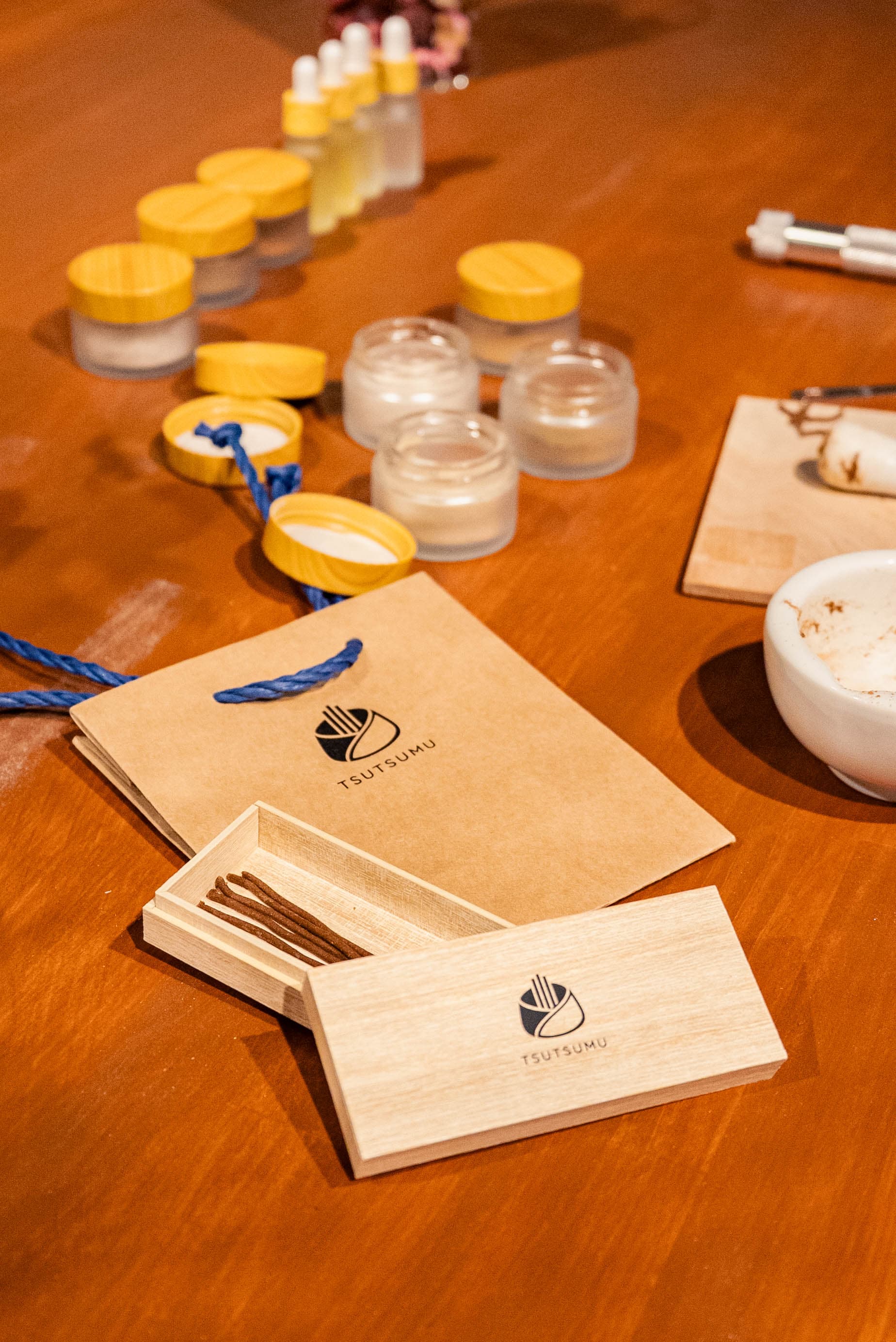
Curiously, as the temperature falls, people begin to find heavier, warmer scents comfortable. Just as fresh lemongrass felt right in the heat, cinnamon and sandalwood start to suit the body from autumn into winter.
Hakata is still deep in summer in August, but in another month the morning and evening air will change. Making the stick you will burn then, now, is not a bad idea at all.
Reservations & Access
- Address: 本島ビル 401, 3-5-20 Hakata Ekimae, Hakata-ku, Fukuoka (about a 10-minute walk from JR Hakata Station, Hakata Exit)Open directions in Google Maps ↗
- Hours: 10:00–18:00 (last entry 17:00)
- 🎐 Open every day in August, including Mondays and Tuesdays (normally our closing days)
- Price: ¥3,500 per person (optional engraving on the wooden box +¥500)
- Duration: about 60 minutes / Languages: Japanese, English, Korean
- Reservations: 24 hours a day via our website / Phone 070-6697-5255
- Instagram / TikTok: @tsutsumu_incense
Knowing the names of the materials changes how the choosing feels. Instead of "something sweet, I suppose," you begin to think: the calm of sandalwood, with cinnamon running through it. That shift is what makes the sixty minutes genuinely interesting. Come and find your own blend in Fukuoka.