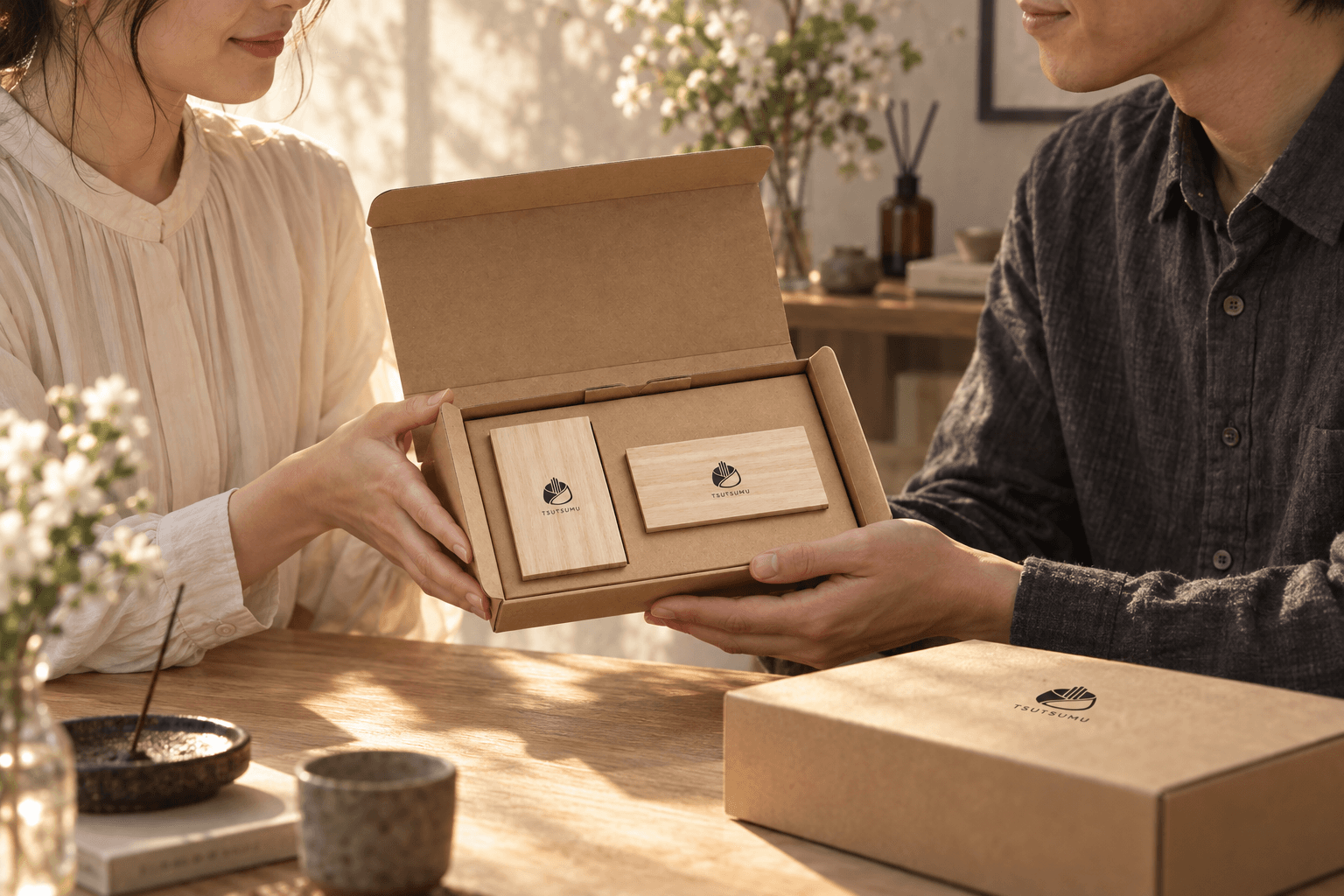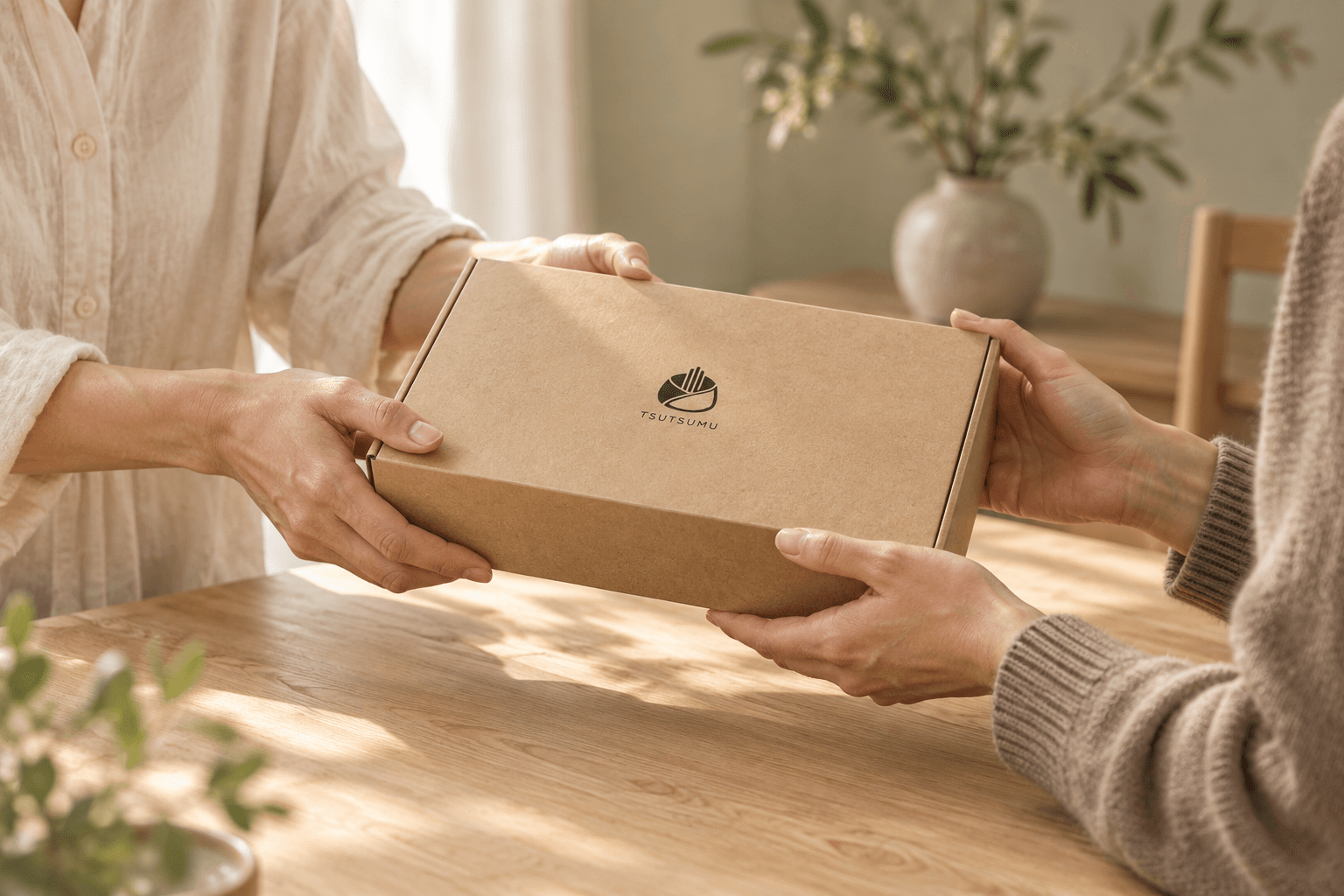
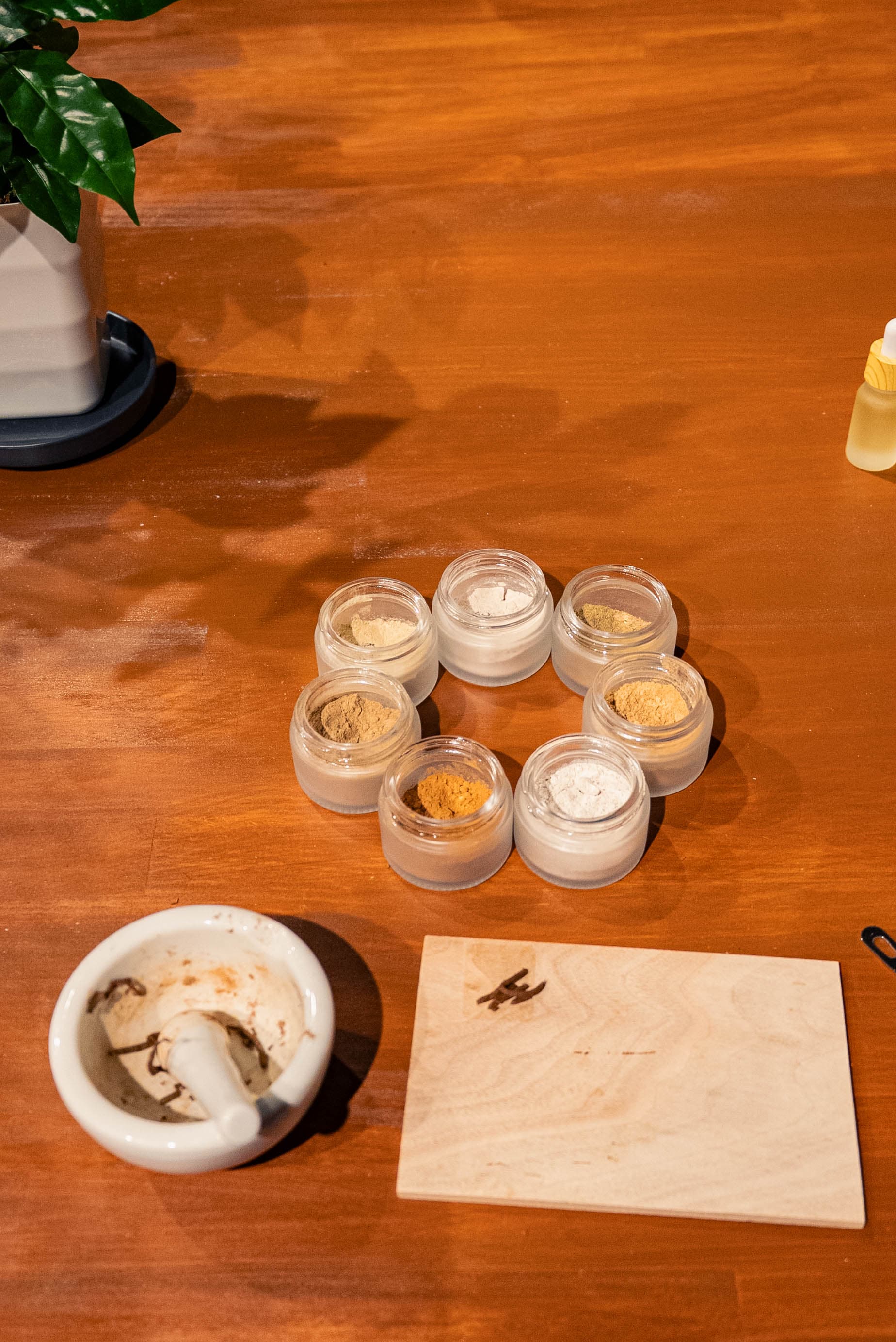
TSUTSUMU is a hands-on incense-making workshop in Hakata, Fukuoka, a ten-minute walk from Hakata Station. The scent most of our guests meet first is byakudan — better known in English as sandalwood. It's the "base" that anchors the whole experience, and the most important fragrance on our table. Here's a closer look at the world of sandalwood — the kind of knowledge that makes the experience even better.
What exactly is byakudan (sandalwood)?
Sandalwood is a tree of the Santalaceae family that grows in India, Sri Lanka, Indonesia, and Australia. Its fragrance comes from the heartwood at the center of the tree. The "Mysore sandalwood" harvested in the Mysore region of India is considered the finest, and has been prized around the world for centuries.
Sandalwood is remarkably rare: a tree takes nearly 30 years to begin giving off its scent, and 80 years or more to develop a truly fine fragrance. Today its international trade is protected under the CITES convention — a precious gift from nature.
The scent — a "milky, sweet" wood
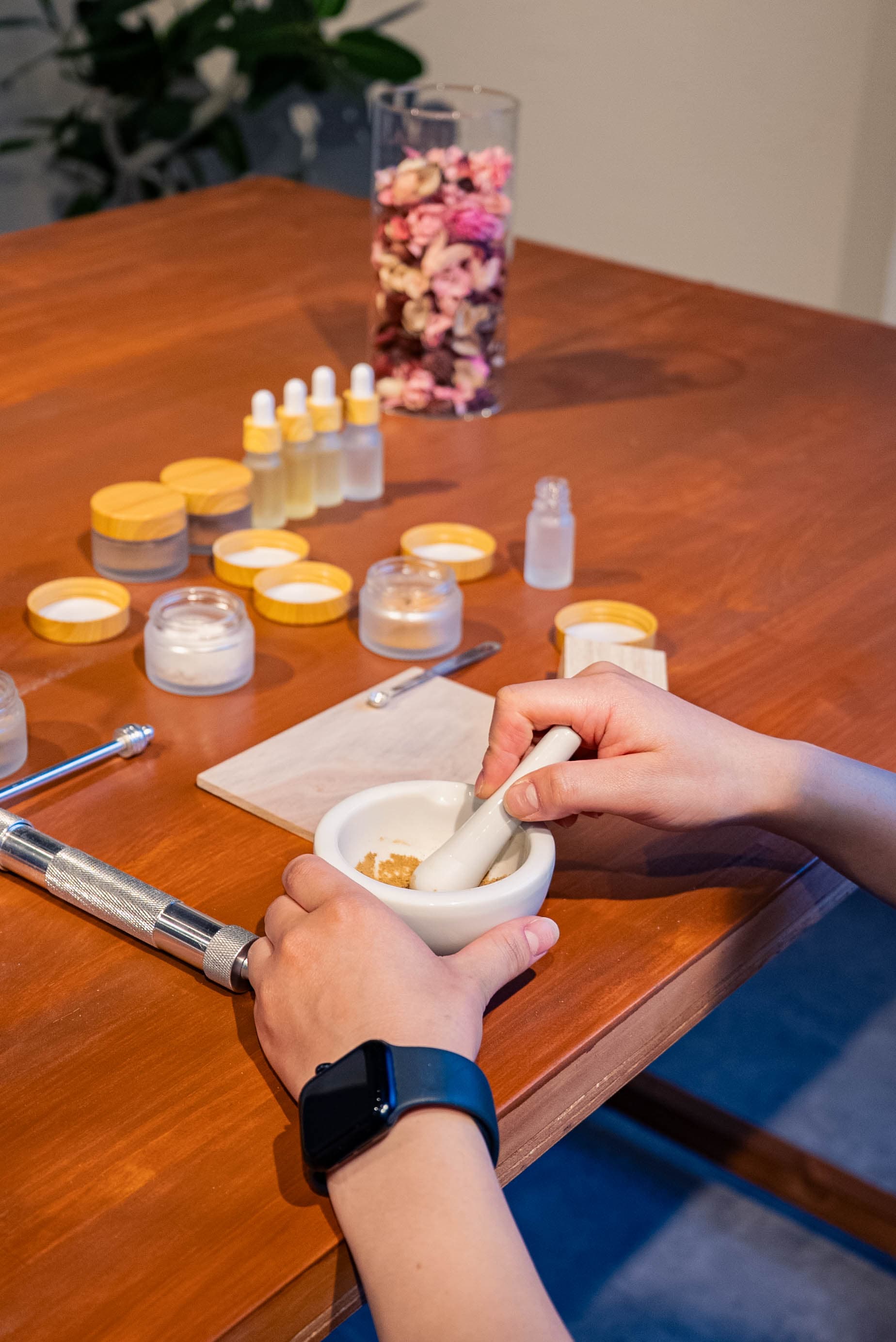
If we had to describe sandalwood in a single word: sweet, mellow, and somehow nostalgic. It's a woody scent carrying a soft, milk-like sweetness — never loud, always settling quietly into you.
Behind that distinctive scent is a natural compound called santalol. Because it can't be reproduced synthetically, sandalwood's fragrance is genuinely one of a kind. The way it slowly shifts over time is part of its depth.
Japan and sandalwood: a bond over 1,300 years old
Japan's relationship with sandalwood reaches far back. The Nihon Shoki records that sandalwood arrived in 671, during the reign of Emperor Tenji. It became the material for Buddhist statues and prayer beads, was used in temple rites, and has always stayed close to daily life and prayer.
In the Muromachi period, kōdō — the "way of incense," appreciating fragrance by "listening" to it — took shape. Sandalwood is honored as one of the "three great incense woods," alongside kyara (agarwood) and jinkō (aloeswood). Making incense is, in a sense, touching this long tradition of Japanese fragrance with your own hands.
Why sandalwood is said to be calming
Santalol, sandalwood's main component, is said to have a strong sedative effect that quiets an over-stimulated nervous system. It eases anxiety and tension and draws you into deeper breathing — no wonder it has long been chosen for temples and meditation.
Sandalwood also works to deodorize and resist bacteria. In the humid rainy season, lighting a little at home freshens the very air of the room. It's a scent you can lean on all year round.
Sandalwood at TSUTSUMU: choosing your "base"
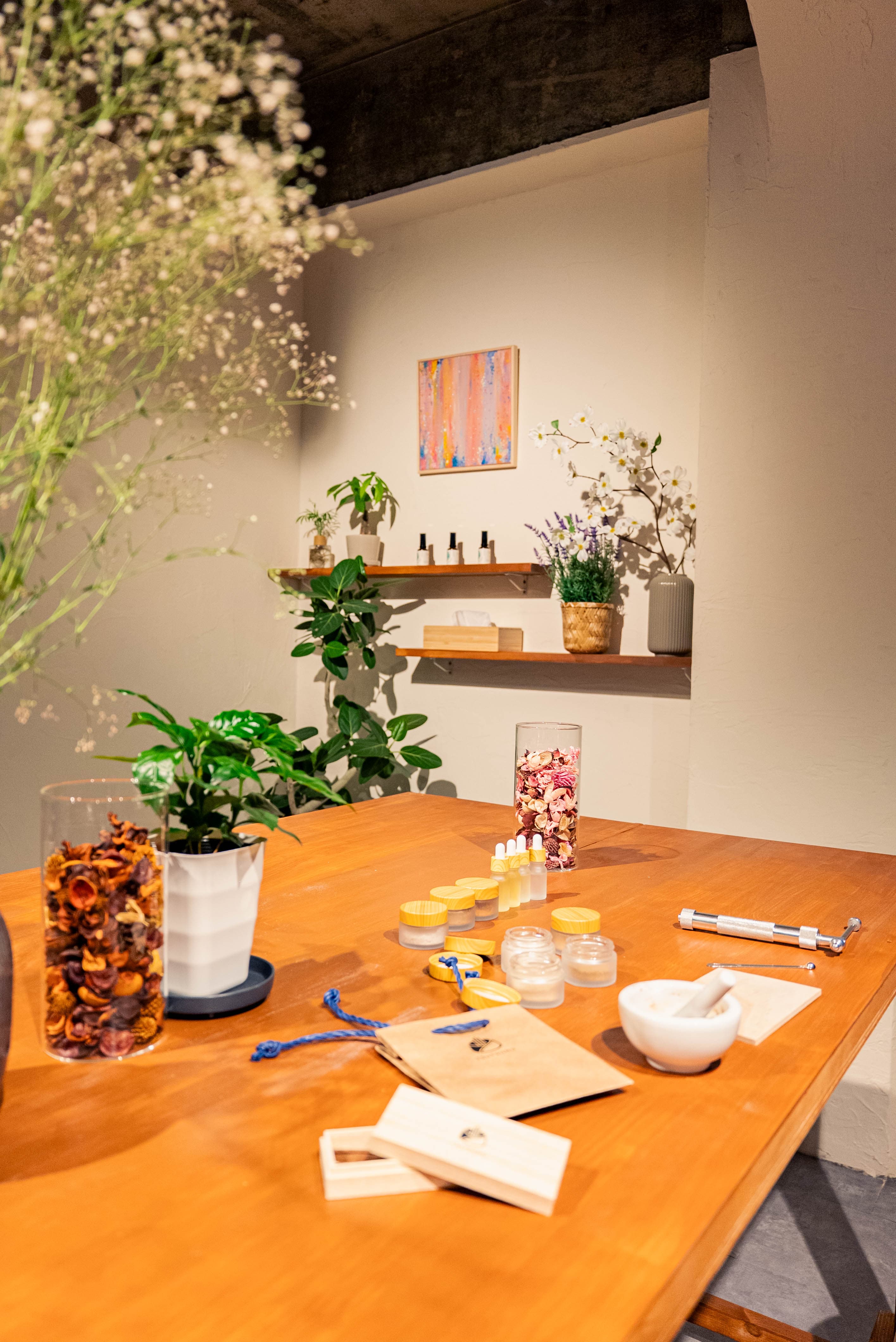
Incense-making at TSUTSUMU begins with choosing one of two "base" scents: sandalwood or frankincense. Choose sandalwood, and you build your own fragrance on top of a sweet, mellow foundation.
On top of it go five "mix" fragrances — lemongrass, benzoin, osmanthus, honeysuckle, and cinnamon. Sandalwood's gentle sweetness harmonizes beautifully with all of them: a wonderfully generous base.
Pairings that work well with sandalwood
- Sandalwood × osmanthus … an elegant floral lift over the sweetness — composed and grown-up
- Sandalwood × honeysuckle … soft and enveloping, with a gentle lingering finish
- Sandalwood × cinnamon … warmth and spice, for a scent with real depth
- Sandalwood × benzoin … sweet and rich, with the sacred air of temple incense
There's no single right answer. The time spent choosing — talking with our staff, following your mood and the feeling you want to wrap up that day — is itself the TSUTSUMU experience.
Visit & booking
- Address: 本島ビル 401, 3-5-20 Hakataekimae, Hakata-ku, Fukuoka (about a 10-min walk from Hakata Station)Open directions in Google Maps ↗
- Hours: 10:00–18:00 (last entry 17:00)
- Closed: Mondays and Tuesdays
- Price: ¥3,500 per person (same for both courses; box engraving +¥500/person)
- Duration: about 60 minutes
- Booking: online 24/7, up to 12:00 the day before / Phone +81-70-6697-5255
Sandalwood has stayed close to the Japanese heart for more than 1,300 years. Blending that deep fragrance with your own hands may well become an unforgettable part of your trip to Fukuoka and Hakata. Come wrap up your own sandalwood scent at TSUTSUMU.